
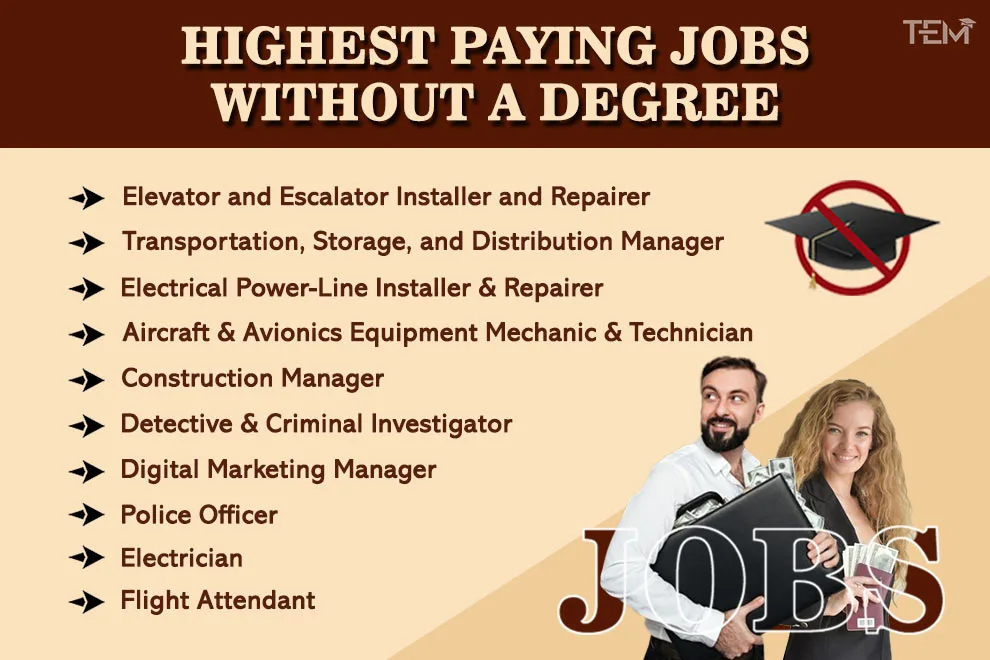
Are you looking to land a job in 2025 without a college degree? You’re not alone, and the good news is, it’s absolutely achievable. Many professionals are finding success through alternative routes. This guide will walk you through the strategies experts recommend for a swift and effective job search, focusing on practical skills and smart approaches.
What Does "Finding a Job Quickly with No Degree" Mean in 2025?
In today’s evolving job market, a degree isn’t always the golden ticket. "Finding a job quickly with no degree" refers to efficiently securing employment by leveraging skills, experience, and targeted job-seeking strategies, rather than relying on formal academic qualifications. It’s about demonstrating your value and capability directly to employers.
This approach recognizes that many valuable skills are learned through experience, apprenticeships, certifications, and self-study. Employers are increasingly prioritizing practical abilities and a strong work ethic.
Why Finding a Job Quickly with No Degree Matters More Than Ever
The landscape of work is shifting rapidly. Automation, the gig economy, and a growing demand for skilled trades mean that traditional degree requirements are being re-evaluated. For many, a degree can be a significant financial and time investment.
Focusing on skills acquisition and direct job application can offer a faster path to financial independence and career satisfaction. It empowers individuals to enter the workforce and gain valuable experience sooner.
The Rise of Skill-Based Hiring
Many companies are now prioritizing demonstrable skills over degrees. They want to see what you can do, not just what you’ve studied. This trend is a direct response to the need for adaptable and practical employees.
This shift opens doors for individuals who have honed their abilities through hands-on work, online courses, or vocational training. It levels the playing field considerably.
Economic Realities and Career Agility
The cost of higher education can be prohibitive for many. Opting for a quicker route to employment allows individuals to start earning and contributing to the economy sooner. This also builds career agility.
Being able to adapt and acquire new skills quickly is paramount. This approach fosters that very adaptability, making you a more resilient candidate.
Your Step-by-Step Guide to Finding a Job Quickly in 2025 with No Degree
Let’s break down the actionable steps you can take to find a job quickly in 2025 without a formal degree. This isn’t about luck; it’s about a strategic and proactive approach.
1. Identify Your Strengths and Transferable Skills
Before you even start applying, take stock of what you’re good at. Think about past jobs, volunteer work, hobbies, or even personal projects. What skills did you use?
- Communication: Are you good at explaining things, listening, or writing clearly?
- Problem-Solving: Can you think on your feet and find solutions?
- Teamwork: Do you collaborate well with others?
- Organization: Are you efficient and good at managing tasks?
- Technical Skills: Do you have experience with specific software, tools, or equipment?
These are your transferable skills – abilities that can be applied across different roles and industries.
2. Target In-Demand Industries and Roles
Research industries that are currently booming and actively hiring. Many of these roles don’t require a degree. Think about fields like:
- Skilled Trades: Electricians, plumbers, HVAC technicians, welders. These roles often offer apprenticeships and excellent earning potential.
- Healthcare Support: Certified nursing assistants (CNAs), medical assistants, phlebotomists. These roles require specific certifications but not necessarily a degree.
- Technology (Entry-Level): IT support, data entry, junior web development (with coding bootcamps).
- Logistics and Warehousing: Forklift operators, inventory specialists, delivery drivers.
- Customer Service and Sales: Roles that value strong interpersonal skills.
3. Gain Relevant Skills Through Alternative Education
While you might not have a degree, you can still acquire specialized knowledge. Look for:
- Certifications: Industry-recognized certifications can prove your competency. For example, CompTIA for IT, OSHA for safety, or specific trade certifications.
- Bootcamps: Intensive, short-term programs in fields like coding, digital marketing, or data analysis are highly effective.
- Online Courses: Platforms like Coursera, edX, Udemy, and LinkedIn Learning offer courses on almost any topic imaginable. Many are affordable or even free.
- Apprenticeships: Formal apprenticeship programs offer paid on-the-job training, leading to skilled careers.
4. Craft a Skills-Focused Resume and Cover Letter
Your resume needs to highlight your skills and achievements, not your lack of a degree.
- Skills Section: Create a prominent section dedicated to your technical and soft skills.
- Experience: Describe your past roles by focusing on accomplishments and responsibilities that showcase your skills. Use action verbs and quantify your achievements whenever possible.
- Certifications/Training: List any relevant certifications or courses completed.
- Cover Letter: Tailor each cover letter to the specific job. Explain how your skills and experience make you a perfect fit for their needs.
5. Network Actively and Strategically
Networking is crucial for finding hidden job opportunities. Don’t underestimate the power of connections.
- Informational Interviews: Reach out to people working in your target industry. Ask them about their jobs, how they got there, and any advice they have. This is not asking for a job directly, but building relationships.
- Industry Events: Attend local job fairs, workshops, and networking events.
- Online Platforms: Engage on LinkedIn. Connect with recruiters and professionals. Share relevant content and participate in discussions.
- Leverage Your Existing Network: Let friends, family, former colleagues, and acquaintances know you are looking.
6. Master the Job Interview
Interviews are your chance to shine and demonstrate your suitability.
- Prepare Thoroughly: Research the company, the role, and common interview questions.
- Practice Your "Story": Be ready to explain your career path and why you’re pursuing this type of work.
- Showcase Your Skills: Use the STAR method (Situation, Task, Action, Result) to provide concrete examples of how you’ve used your skills to solve problems or achieve goals.
- Ask Insightful Questions: This shows your engagement and interest.
7. Consider Temp-to-Hire or Contract Roles
Temporary or contract positions can be excellent stepping stones. They offer a way to gain experience, prove your worth, and often lead to permanent employment.
Many companies use these roles to assess candidates before committing to a full-time hire. It’s a fantastic way to get your foot in the door.
Common Mistakes to Avoid When Looking for a Job Without a Degree
Even with the right strategy, it’s easy to stumble. Here are common pitfalls to steer clear of.
1. Undervaluing Your Skills
Don’t assume your practical skills aren’t valuable. If you can do something well, it has market value.
2. Applying for Every Job
Spamming applications rarely works. Focus on roles that genuinely align with your skills and interests.
3. Not Customizing Applications
A generic resume and cover letter will get lost in the shuffle. Always tailor your materials.
4. Neglecting Your Online Presence
Employers often check social media. Ensure your online profiles are professional and positive.
5. Giving Up Too Soon
Job searching takes time and persistence. Don’t get discouraged by rejections.
Expert Tips to Master Finding a Job Quickly in 2025 with No Degree
Want to go from good to great in your job search? These advanced tips can make a significant difference.
Leverage Your Portfolio
If you’re in a creative or technical field, build a portfolio showcasing your best work. This could be a website, a collection of projects, or case studies.
Seek Out Mentorship
A mentor can provide invaluable guidance, industry insights, and networking opportunities. Look for experienced professionals who are willing to share their knowledge.
Be Open to Entry-Level Roles That Offer Growth
Sometimes, the best way to get in is through an entry-level position that has clear pathways for advancement and training. Focus on the long-term potential.
Highlight Your Enthusiasm and Learnability
Employers often value a candidate’s eagerness to learn and grow. Emphasize your positive attitude and willingness to take on new challenges.
Get Comfortable with Technology
Familiarize yourself with common workplace software and communication tools. Being tech-savvy is a major asset in almost every industry.
Real-Life Example: Sarah’s Swift Career Transition
Sarah worked in retail for five years, developing strong customer service, sales, and inventory management skills. She didn’t have a degree but wanted to move into a more stable, higher-paying field.
She identified a growing demand for administrative professionals in healthcare. Sarah completed a short online medical terminology course and obtained a certification as a Medical Office Assistant. She then revamped her resume to highlight her organizational skills and customer-facing experience, framing them as transferable to a healthcare setting.
Sarah networked with a recruiter specializing in healthcare staffing. Within three weeks of starting her focused search, she landed a full-time administrative role at a local clinic, complete with benefits and opportunities for further training.
Final Thoughts on Finding Your Next Opportunity
Finding a job quickly in 2025 without a degree is entirely within your reach. It requires a strategic blend of self-awareness, targeted skill development, and proactive networking. By focusing on what you can do, demonstrating your value, and approaching your job search with a confident and determined mindset, you can achieve your career goals.
Remember, your journey is unique. Embrace the opportunities that skill-based hiring and evolving industries present. Start implementing these strategies today, and you’ll be well on your way to securing a fulfilling position in the year ahead. Your potential is not defined by a diploma, but by your drive, skills, and dedication.
